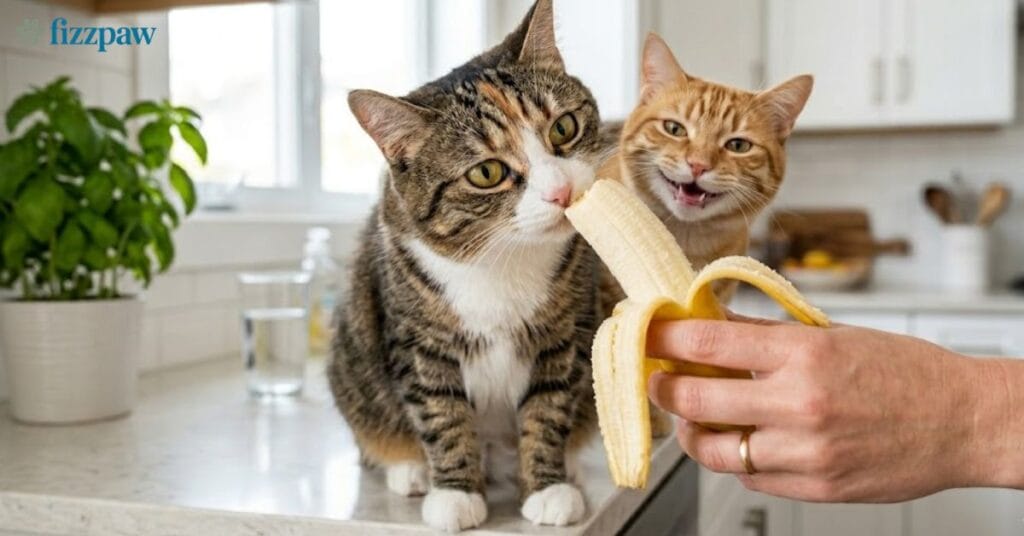
You’re snacking on a banana and your cat is staring at you with those big eyes. Should you share? Can cats eat bananas safely, or is this one of those foods you need to avoid entirely?
Quick Answer: Can Cats Eat Bananas?
Yes, Cats can eat bananas in very small amounts. Bananas are non-toxic to cats, but they’re high in sugar and offer little real nutritional benefit for felines. A pea-sized bite once or twice a month is the safe maximum. Kittens, diabetic cats, and overweight cats should avoid bananas entirely.
Cats are obligate carnivores, which means their bodies are built to run on animal protein. Bananas are packed with sugar and carbohydrates that cats simply don’t need and aren’t well adapted to digest in large amounts.
In this complete guide, you’ll learn exactly what the risks are, what vets recommend, how much is safe, and what to do if your cat eats too much.
Are Bananas Safe for Cats?
Bananas are classified as non-toxic for cats. They don’t contain compounds that cause organ damage the way grapes, raisins, or xylitol do. That’s a clear distinction worth making.
However, safe and beneficial are very different things. To understand why banana isn’t ideal for cats, you have to understand how cats process food.
Cats are obligate carnivores. Their digestive systems evolved specifically to break down and absorb nutrients from meat. Unlike omnivores like dogs or humans, cats are not well adapted to digest large amounts of plant-based carbohydrates. Their livers also lack certain enzymes that help convert plant nutrients into usable forms.
So while bananas won’t send your cat to the emergency vet, their body isn’t designed to handle the sugar load efficiently. The fructose, starch, and fiber in bananas can all trigger digestive issues, especially if your cat eats more than a very small amount.
⚠️ Never feed banana peel to your cat. The peel is far harder to digest and may carry pesticide residue. Only offer plain, peeled banana in tiny amounts.
Are Bananas Good for Cats? (Nutrition Breakdown)
Bananas are a nutritional powerhouse for humans. For cats, the picture is very different. Let’s break down what’s actually in a banana and whether it helps your cat at all.
| Nutrient | In Bananas | Benefit for Cats |
| Potassium | High | Supports basic body functions, but cats already get enough from a meat-based diet |
| Vitamin B6 | Moderate | Supports normal metabolic functions, but benefits are minimal for cats |
| Fiber | Moderate | Minimal value; cats don’t need high-fiber diets and too much causes loose stools |
| Manganese | Low-moderate | Negligible; cats absorb this efficiently from animal protein |
| Natural Sugar (fructose) | High | No benefit; excess sugar stresses the pancreas over time |
| Carbohydrates | High | No benefit; cats don’t use carbs efficiently as an energy source |
Potassium: A Minor Role
Bananas are well known for their potassium content. Potassium does support heart function, muscle health, and fluid balance in cats. But here’s the catch: a cat eating a complete, balanced diet already gets plenty of potassium from meat. Banana doesn’t fill any gap. It just adds sugar alongside a nutrient your cat is already getting enough of.
Vitamin B6: Limited Benefit
Bananas contain vitamin B6, which supports normal metabolic functions including protein metabolism. However, cats absorb B6 far more efficiently from animal-sourced foods. The B6 found in a banana gives your cat very little meaningful benefit compared to what they’d get from their regular food.
Fiber and Manganese: Minimal Digestive Support
Some pet owners assume the fiber in bananas helps with digestion. In small amounts, it’s neither helpful nor harmful. But cats don’t need dietary fiber the way humans or herbivores do. Too much fiber from fruit can actually loosen stools and cause gastrointestinal upset. For manganese, the same logic applies: cats get what they need from meat.
Vet Tip: A high-quality, complete cat food already provides everything your cat needs nutritionally. Bananas add sugar and calories without adding real value to their diet.
Do Cats Even Like Bananas?
Interestingly, most cats aren’t drawn to bananas at all. The reason comes down to biology.
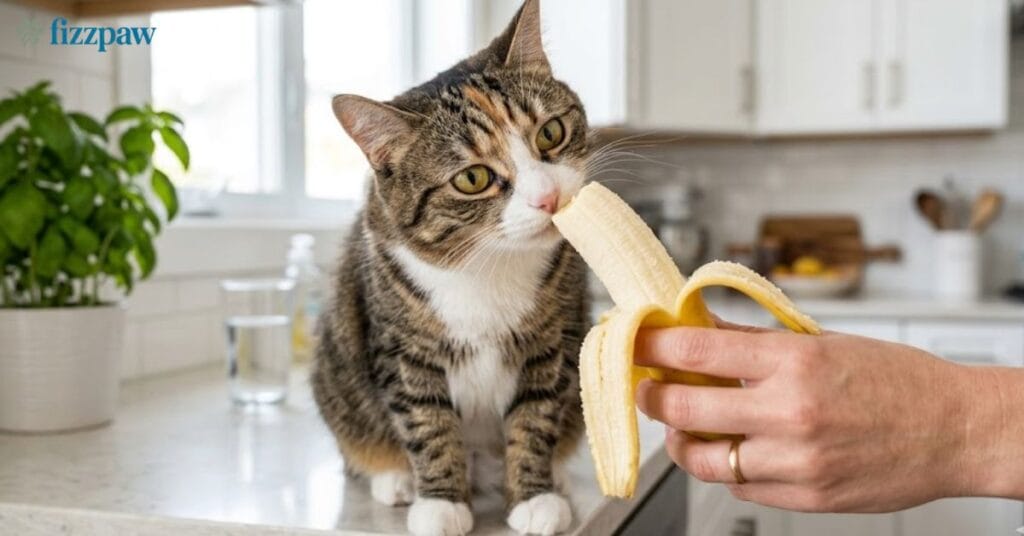
Cats lack strong sweet taste receptors, so they don’t perceive sweetness the way humans do. That sweet flavor you enjoy in a banana registers as essentially nothing to your cat. There’s no sensory reward for them.
Some cats may show curiosity about the texture or smell, especially if they see you eating something. A quick sniff or a small lick is often more about investigating your behavior than actually wanting the food. Most cats will walk away unimpressed.
You may have also seen videos of cats reacting dramatically to unpeeled bananas placed behind them. This is a startle response. The shape and color of a whole banana can resemble a snake to a cat. It’s not a sign that bananas are toxic; it’s simply a prey-animal instinct kicking in.
4 Real Risks of Feeding Bananas to Cats
Even though bananas are non-toxic, there are real reasons to be cautious. Here are the four main risks every cat owner should know.
1. Too Much Sugar
Bananas contain high levels of natural sugars, including fructose, sucrose, and glucose. Cats don’t need dietary sugar, and their bodies handle it poorly. Regularly exposing your cat to sugary foods can stress the pancreas and, over time, contribute to insulin resistance and metabolic issues.
For diabetic cats or those already showing signs of metabolic problems, even a small amount of banana sugar can be problematic.
2. Stomach Upset and Diarrhea
Many cats experience digestive upset after eating banana. The sugars and fiber content can irritate the gastrointestinal tract, especially in cats with sensitive stomachs. The most common symptoms are soft stools, diarrhea, and vomiting, usually appearing within a few hours of eating.
If your cat already deals with digestive issues, learn more about common triggers in our guide to why cats drool and show digestive symptoms.
3. Weight Gain Over Time
Cats need far fewer daily calories than most people realize. The average indoor cat needs around 200 to 250 calories per day. Even a few bites of banana can represent a meaningful calorie increase for a small animal.
Over time, regular high-sugar treats contribute directly to obesity, one of the most common and serious health problems in domestic cats in the United States.
If your cat is already carrying extra weight, our vet-approved cat weight loss guide covers safe, effective strategies to help them reach a healthier size.
4. Choking Risk
Large or firm pieces of banana can be a choking hazard, particularly for smaller cats and kittens. The soft, sticky texture can get stuck in the throat. If you’re going to offer banana at all, always mash it or cut it into very small, pea-sized bites first.
Banana Peel Warning: Never Feed This Part
Never give your cat banana peel. This is not a gray area. Peel is off-limits, regardless of whether the banana is organic or conventional.
Here’s why banana peel is dangerous for cats:
• It’s extremely difficult to digest. The tough, fibrous texture of banana peel can cause intestinal blockages in cats.
• It may carry chemical residue. Even washed banana skins can retain traces of pesticides or fungicides used during growing and shipping.
• It causes GI distress. Vomiting, abdominal pain, and diarrhea are common reactions if a cat eats even a small piece of peel.
If your cat chews on or swallows banana peel, watch them closely for signs of vomiting, straining, or lethargy. Contact your vet if symptoms develop or persist.
How Much Banana Can a Cat Eat? (Safe Portion Guide)
If you decide to offer banana, the portion needs to be very small. Here’s a practical guide based on cat size and health status:
| Cat Type | Safe Portion Size | Frequency |
| Kitten (under 1 year) | Not recommended | Avoid entirely |
| Small adult cat (under 8 lbs) | 1 tiny bite (pea-sized) | Once or twice a month at most |
| Average adult cat (8 to 12 lbs) | 1 to 2 small bites | Once or twice a month at most |
| Large adult cat (over 12 lbs) | 2 to 3 small bites | Once or twice a month at most |
| Diabetic or overweight cat | None | Avoid entirely |
As a general rule, treats of any kind should make up no more than 10% of your cat’s daily caloric intake. For most cats, one small bite of banana is already at or near that limit.
Can Cats Eat Banana Every Day?
No. Cats should not eat bananas every day. This is one of the most common questions cat owners search for, and the answer is clear.
Even though a single small piece of banana won’t harm your cat, daily feeding creates real problems over time. Here’s what repeated banana consumption does:
• It adds a consistent sugar load to your cat’s diet, increasing the risk of blood sugar imbalance and pancreatic strain.
• It adds excess calories that accumulate into gradual weight gain, especially in indoor cats with lower activity levels.
• It can normalize digestive upset. Cats that eat banana regularly may experience chronic soft stools or minor GI inflammation that owners mistake for normal digestion.
• It may displace more beneficial treats or, worse, reduce appetite for their complete cat food.
The right frequency is rare, meaning once or twice a month at most, and only in very small amounts. Think of banana as an occasional novelty, not a snack you keep coming back to.
Daily banana feeding is not safe for cats, even in small amounts. Stick to a once or twice a month limit, and skip it entirely for kittens, diabetic cats, or overweight cats.
How to Safely Feed Your Cat Banana
Best Safe Forms
• Mashed banana: easiest to control portion size and eliminates choking risk.
• Tiny soft pieces: cut into pea-sized bites before offering.
• Frozen tiny bits: some cats enjoy a cold treat in summer. Freeze small mashed pieces in an ice cube tray for a refreshing variation.
Avoid banana chips, dried banana, banana-flavored snacks, or any product with banana as an ingredient. These are often concentrated in sugar and may contain added sweeteners, artificial flavors, or xylitol, which is extremely toxic to cats.
Step-by-Step Feeding Method
• Offer just a pea-sized amount the first time, nothing larger.
• Watch your cat for 24 hours for any signs of digestive upset: vomiting, diarrhea, or lethargy.
• If there’s no reaction, you can offer a small piece again on rare occasions.
• Never offer banana as a meal replacement or as a daily treat.
• If your cat shows zero interest, don’t push it. Most cats won’t want it, and that’s perfectly fine.
Can Kittens Eat Bananas?
It’s best to avoid giving banana to kittens entirely. Kittens are more sensitive than adult cats for several reasons:
• Their digestive systems are still developing and react more strongly to unfamiliar foods.
• Kittens need a very high-protein diet formulated specifically for growth. Introducing sugary fruit can displace nutrients they actually need.
• Even a small amount of banana can cause diarrhea in a kitten, which can quickly lead to dehydration — a serious concern in young cats.
Can Diabetic Cats Eat Bananas?
No. Diabetic cats should not eat bananas under any circumstances.
If your cat has diabetes, blood glucose management is the foundation of their care. Bananas are high in natural sugars, and even a small amount can spike blood glucose in ways that are difficult to control. Diabetic cats need very low-carbohydrate diets built around high-protein wet food.
Adding any sugary fruit, no matter how small the portion, works directly against that goal. Talk to your vet about safe treat options that won’t affect your cat’s insulin management.
⚠️ Diabetic cat? Skip the banana entirely. Your vet can recommend treats that are safe and blood-sugar friendly.
Signs Your Cat Is Sensitive or Allergic to Bananas
True banana allergies are rare in cats, but food sensitivities are not. After offering any new food for the first time, watch closely for these symptoms:
• Vomiting, usually within 1 to 4 hours of eating
• Diarrhea or unusually soft stools
• Lethargy or seeming more tired than normal
• Excessive grooming, scratching, or skin irritation, which can point to a mild allergic response
• Swollen face or hives, rare but possible with food sensitivity
Mild symptoms like soft stools typically resolve within 24 hours. Withhold food briefly and make sure your cat stays hydrated. For more serious reactions such as repeated vomiting, facial swelling, or lasting lethargy, contact your vet promptly.
What Happens If a Cat Eats Too Much Banana?
If your cat somehow eats a large amount of banana, here’s what to expect and when to act.
Short-term GI effects: Vomiting, diarrhea, stomach bloating, and general discomfort are the most likely outcomes. These usually clear within 12 to 24 hours in otherwise healthy adult cats.
Blood sugar impact: The high sugar content can temporarily affect blood glucose, especially in cats with existing metabolic sensitivities.
Blockage risk from peel: If your cat ate banana peel rather than the fruit itself, this is a more serious situation. Watch for straining, refusal to eat, crying, or signs of abdominal pain.
Contact your vet if your cat vomits repeatedly, seems to be in pain, refuses food for more than 24 hours, or appears severely lethargic. If peel was consumed, call your vet proactively even before symptoms appear.
What Fruits Are Safer Than Bananas for Cats?
If you enjoy giving your cat the occasional fruit treat, several options are lower in sugar and easier on their digestive system than banana.
| Fruit | Safe for Cats? | Sugar Level | Notes |
| Watermelon (seedless, no rind) | Yes | Low-moderate | Hydrating; remove all seeds and rind |
| Blueberries | Yes | Low | Rich in antioxidants; offer 1 to 2 at a time |
| Cantaloupe | Yes | Moderate | Small pieces only; remove seeds and skin |
| Strawberries | Yes | Low | Remove stem and leaves before offering |
| Banana | Yes (tiny amounts) | High | Occasional rare treat only; never peel |
| Grapes or Raisins | NEVER | N/A | Toxic — can cause acute kidney failure |
| Citrus fruits | No | Low | Can cause GI upset and skin irritation; avoid |
| Cherries | No | Moderate | Pits, stems, and leaves contain cyanogenic compounds |
Blueberries are widely considered one of the best fruit treats for cats. They’re small, low in sugar, and packed with antioxidants. Offer just one or two at a time.
More on keeping your cat healthy:
• How to Help Your Cat Lose Weight: Vet-Approved Safe & Effective Weight Loss Plan
• Why Do My Cat Drooling? Causes, Diagnosis, and Treatment Explained
What Do Veterinarians Say About Cats and Bananas?
Most vets share a consistent view on this topic. Bananas are non-toxic to cats, but they offer no real nutritional value and should be treated as a rare, optional treat, nothing more.
The ASPCA Animal Poison Control Center classifies bananas as non-toxic for cats and dogs. However, non-toxic classification doesn’t imply recommendation. Vets are careful to distinguish between foods that won’t kill your pet and foods that are actually good for them.
Key points vets consistently emphasize:
• Cats with obesity, diabetes, or chronic digestive conditions should avoid bananas entirely.
• No cat biologically requires fruit. If your cat has never had banana, there’s no reason to introduce it.
• A complete, balanced cat food already covers every nutritional need your cat has.
• If you want to offer treats, cat-specific treats formulated for feline nutrition are always a better choice than human foods.
✅ Vet Tip: Always check with your vet before introducing any new food to your cat’s diet, especially if they have an existing health condition. A quick call can save a lot of worry.
Frequently Asked Questions About Cats and Bananas
1. Is it safe for cats to eat bananas?
Yes, bananas are safe but not ideal. Only give a tiny piece occasionally. Too much can cause stomach upset or diarrhea.
2. Do cats understand when you say no?
Not the word itself. Cats understand your tone and body language, not language.
3. Can cats eat banana peel?
No. Banana peel should never be given to cats. It’s very difficult to digest, may contain pesticide residue, and can cause vomiting or intestinal blockage. Only plain, ripe, peeled banana in tiny amounts is considered safe for cats.
4. Why do cats run around at 3am?
Because of natural hunting instincts and extra energy. Cats are more active at night and early morning.
5. What annoys cats the most?
Loud noises, forced handling, dirty litter boxes, strong smells, and lack of personal space.
Final Thoughts
So, can cats eat bananas? Yes, but with a clear understanding of what that actually means. A pea-sized bite occasionally won’t harm your cat. But bananas aren’t healthy for cats, they don’t need them, and regular feeding creates real risks including sugar overload, weight gain, and digestive upset.
The bottom line is simple: cats thrive on high-quality animal protein. Fruit treats are optional, and if you want to offer them, lower-sugar options like blueberries are a better choice. Banana belongs firmly in the “rare novelty” category, not the snack rotation.
When in doubt, talk to your vet. They know your cat’s specific health profile and can give you personalized advice on what treats are safe and appropriate.
You might also enjoy reading:
• Why Does My Cat Bite Me Then Lick Me? Real Reasons & What to Do
• Do Cats Get Rid of Rats? The Truth About Feline Pest Control