Cats do not speak human language, which means their tail movements serve as their main method of communication. By learning what cat tail says you, you can understand your furry friend better, keep them happy, and make your bond stronger.
Cats use their tails to balance their movements, and their tail movements also serve as their main communication method while their tails help them maintain body temperature. Every flick, curl, or wiggle has a meaning. The guide enables you to understand your cat’s tail movements which will help you identify your cat’s emotional state.
Why Cat Tails Are Important
A cat’s tail serves as more than an ornamental fur display. The tail functions as a tool which helps cats maintain their stability during narrow walking and jumping movements. The system operates similar to how tightrope walkers maintain their balance through their arm movements. Cat mobility becomes restricted when they lose their tails because it makes their bodies unsteady.
The functions of tails enable animals to communicate with each other. Cats display their emotional state through their tail movements, which demonstrate happiness and fear and curiosity and distress. A cat’s confidence displays itself through high tail position, while its fear displays itself through tail tuck. Cats use their tails as warm blankets which they can wrap around their bodies to maintain body heat.
Also Read: Do Cats Get Rid of Rats
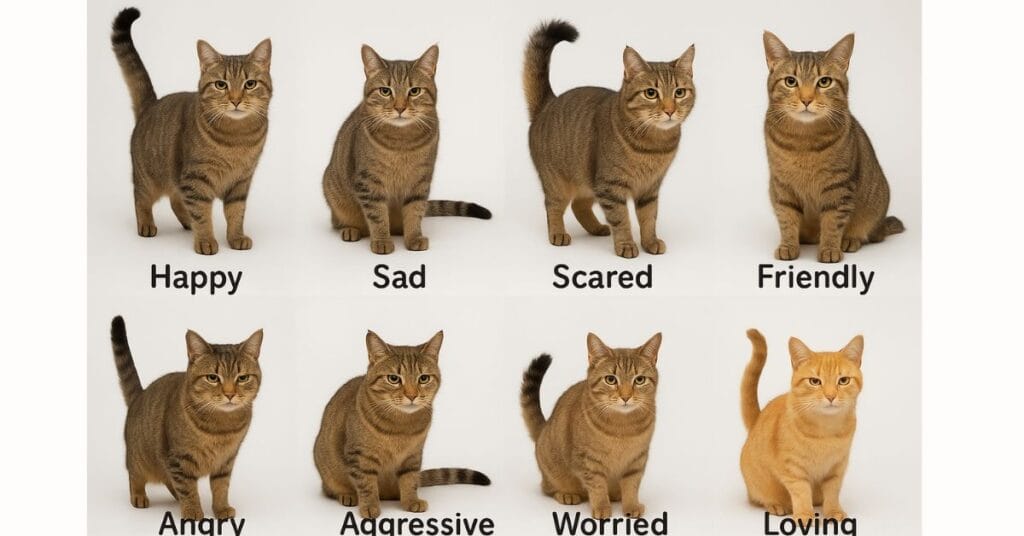
Quick facts about cat tails:
- Tails have 19 to 23 small bones called vertebrae.
- They contain many nerve endings, so cats feel even small touches.
- Some breeds, like Maine Coons, have long, bushy tails, while Manx cats may have no tail at all.
Common Tail Positions and Their Meanings
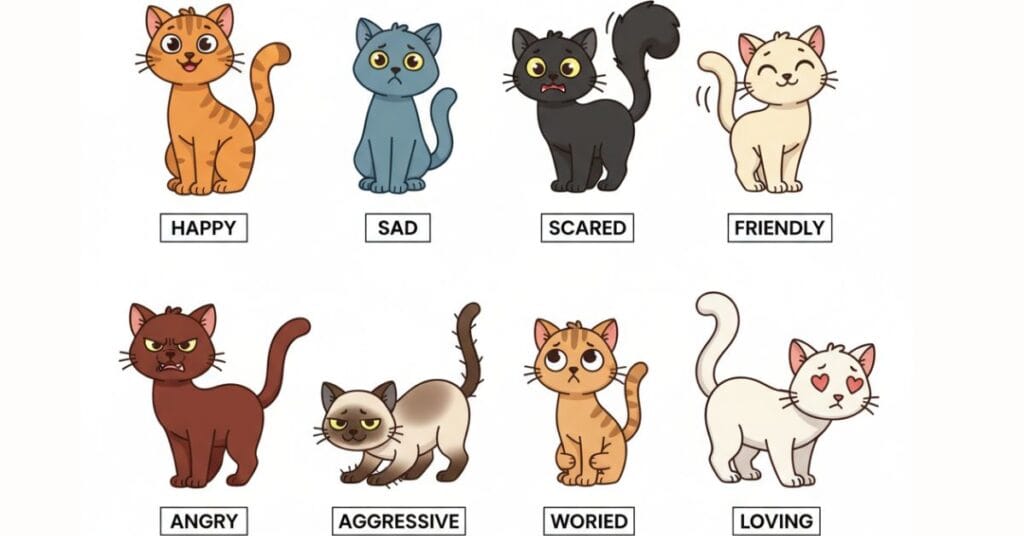
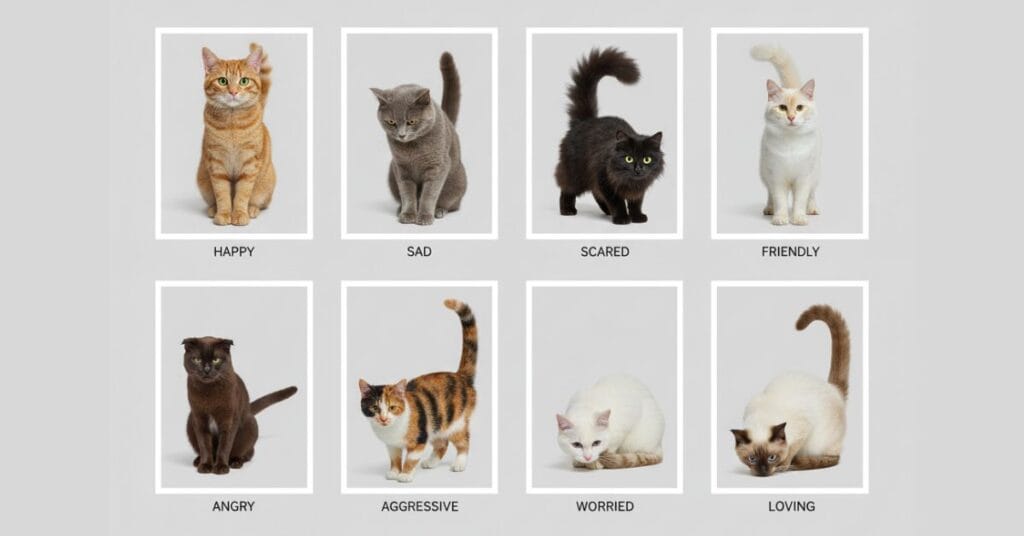
A cat’s tail can tell you a lot about how they are feeling. Paying attention to tail positions helps you know when your cat is happy, scared, or playful. Here are the most common tail positions and what they mean:
Tail Straight Up
The tail held straight up indicates that the cat is happy, confident, or excited since the tail tips might sometimes be quivering. It is a sign of friendship and an expression that your cat feels safe in your company.
Curved or Question Mark Tail
The curved tail or the question mark tail denotes friendliness and curiosity from your cat. The cat does so when approaching those it likes. It is also an indication of a non-verbal way of greeting.
Low or Tucked Tail
This is a sign that your cat is fearful and anxious. It is done by cats when they are unsure of something or feel threatened. Your cat needs space, and letting them know will be better for the situation.
Puffed-Up Tail
A tail that is puffed up means the cat is frightened or feeling threatened. It makes the cat look bigger to scare others. Avoid touching or approaching the cat when you see this.
Tail Wrapped Around Body or Others
Cats tend to wrap their tails around their bodies as well as around other cats to express their affections and bond. When your cat wraps its tail around you, it means that it is safe and love being close to you.
Also Read: Why Does My Cat Bite Me Then Lick Me? Real Reasons & What to Do
What Your Cat’s Tail Movements Really Mean
A cat’s tail doesn’t just stay in one position. How it moves can tell you even more about their feelings. Watching tail movements can help you understand when your cat is happy, playful, angry, or worried.
- Swishing: If the tail moves slowly from side to side, the cat is curious or relaxed. They are paying attention but not upset.
- Flicking: A quick flick of the tail tip usually means the cat is alert or focused. They might be hunting, playing, or noticing something interesting.
- Lashing or Whipping: Rapid tail movements from side to side show the cat is angry, frustrated, or scared. It’s best to give them space.
- Quivering: Tiny shaking or trembling of the tail often happens when a cat is excited or happy to see you.
Quick Tail Movement Table:
| Tail Movement | Meaning | What to Do |
| Swishing | Relaxed or curious | Watch calmly |
| Flicking | Alert or playful | Engage with toys |
| Lashing/Whipping | Angry or scared | Step back, give space |
| Quivering | Excited or greeting | Pet gently or greet them |
According to Dr M. Leanne Lilly, a veterinary behaviorist at Ohio State University, “A cat’s tail is a window into its emotions. Combining tail signals with ear and body posture gives the full picture of how a cat feels” (Ohio State Veterinary Medical Center).
Also Read: Home Remedies for Cat Constipation: Complete Natural Relief Guide
Why Cats Chase or Bite Their Tails
Sometimes cats chase or bite their own tails. This can look funny, but it usually has a reason. Kittens often do it as a form of play or practice hunting. They are learning how to jump, pounce, and catch, and their tail becomes a fun target.
Adult cats may chase their tails when they feel bored, stressed, or overexcited. If a cat does this too much, it can cause injury or irritation. Giving your cat toys, puzzle feeders, or daily playtime helps redirect this energy safely.
Tips to prevent tail chasing:
- Use interactive toys like feathers or balls.
- Provide scratching posts to burn energy.
- Play with your cat for 10–15 minutes daily to reduce boredom.
- Avoid overstimulating your cat, as it can make chasing worse.
Case Study:
Luna, a 2-year-old Maine Coon, used to chase her tail constantly when bored. After adding puzzle feeders and two daily play sessions, her tail-chasing behavior stopped in two weeks, and she became calmer and happier.
Cats With No Tail or Crooked Tails
Some cats are born with short tails or no tail at all. Breeds like the Manx or Bobtail have this naturally due to genetics. Even without a full tail, these cats can balance and move well. They use their body and inner ear to stay steady.
A crooked tail can happen from injuries or genetics. It might bend, kink, or heal slightly twisted after an accident. Most cats adapt quickly and continue to play, jump, and move confidently.
Important points to remember:
- Tail-less or short-tailed cats still communicate using body language and ears.
- Crooked tails may increase the risk of arthritis, so gentle play is important.
- Cats can compensate naturally for lost or short tails, using body posture to express emotions.
Even without a perfect tail, cats can still show happiness, fear, or affection. Observing what cat tail says you alongside other cues like ear position and purring helps you understand them fully.
How Age, Personality, and Breed Affect Tails
A cat’s tail can look and move differently depending on their age, personality, and breed. Kittens often wag, flick, or chase their tails a lot because they are playful and learning about the world. Adult cats tend to show more subtle tail movements that reflect confidence, curiosity, or mood.
Personality also matters. Shy or nervous cats may keep their tails low or tucked, while confident cats hold their tails high and straight. Playful cats flick their tails quickly when excited, while calm cats swish them slowly from side to side.
Different breeds have unique tail features:
- Maine Coons: Long, bushy tails that express emotions clearly.
- Siamese: Sleek, straight tails, often held high.
- Manx: No tail, rely more on body posture and ears for communication.
Understanding these differences helps you better interpret what cat tail says you, making it easier to respond to their needs and emotions.
How to Respond to Your Cat’s Tail
Knowing what cat tail says you helps you react in the right way. A cat’s tail shows if they are happy, scared, or playful, and your response can make them feel safe or loved.
- Tail straight up: Approach gently and enjoy this friendly greeting.
- Tucked or low tail: Give space and avoid sudden movements.
- Flicking tail: Engage in play or watch for signs of irritation.
- Puffed-up tail: Step back; the cat is scared or defensive.
- Wrapped tail around you: Pet gently; your cat is showing trust and affection.
Quick Response Table:
| Tail Position | Meaning | How to Respond |
| Straight up | Happy, confident | Approach gently |
| Low or tucked | Scared, anxious | Give space |
| Flicking | Alert, playful | Engage with toys |
| Puffed-up | Frightened, defensive | Step back, stay calm |
| Wrapped around you | Trust, affection | Pet gently, bond with cat |
Observing your cat’s tail along with ears, eyes, and body posture gives a full picture of their mood. This makes it easier to interact safely and strengthen your bond.
Fun and Fascinating Cat Tail Facts
Cat tails are full of surprises! They aren’t just for balance or showing emotions—they have some really interesting features. For example, a cat’s tail has 19–23 tiny bones, which is about 10% of the bones in their body. That’s a lot for something so small!
Some fun facts:
- Longest recorded tail: A Maine Coon named Cygnus had a tail over 44 cm (17.5 inches) long.
- Cats can wrap their tails around themselves like a blanket to stay warm.
- Big cats, like lions or tigers, usually walk with their tails horizontal, unlike domestic cats, which hold them upright.
- Tail touching is sensitive; pulling can hurt or stress your cat.
These facts help you appreciate the importance of a cat’s tail and why paying attention to it can make you a better cat owner.
Personal Story – How My Friend’s Cat’s Tail Taught Me About Its Mood
The happy cat at my friend’s home taught me about its behavior through its tail movements. Whiskers displayed excitement through his tail, which he held high while it quivered. The situation presented itself to me without explanation during the initial encounter.
I discovered Whiskers’ true emotions when I saw his tail puffed up and swinging because he was frightened of the stranger who entered our home. He became calm through our interaction, which involved me giving him distance while I spoke in gentle tones. The tail movements of Whiskers enabled me to learn about feline tail communication, which demonstrated how tails provide direct access to a cat’s emotional state.
FAQs About What Cat Tail Says You
Q1: What is my cat’s tail telling me?
It shows emotions like happiness, fear, or curiosity. Watch its position and movements to know what cat tail says you.
Q2: How do cats say I love you?
They wrap their tails around you or brush against you. A tail hug shows trust and affection.
Q3: How do cats say “I’m sorry”?
Cats approach slowly and may gently brush their tail or head, showing peaceful intentions.
Q4: What is your cat saying to you? What cat tail says you meaning
Tail positions and movements reveal moods. Straight up is happy, tucked is scared, flicking is alert, puffed is fear.
Q5: Why do cats wag their tails while lying down?
Slow wagging shows curiosity or mild interest; quick wagging shows irritation or excitement.
Q6: Why does my cat wag his tail when I pet him?
Gentle swishing shows contentment, fast flicks warn they are overstimulated.
Q7: Why does my cat’s tail vibrate when she sees me?
Tail quivering shows excitement and happiness. Your cat is greeting you warmly.
References & Expert Links: